Circle Navigation Reflex Test
Reviews
Description
Core Gameplay Loop
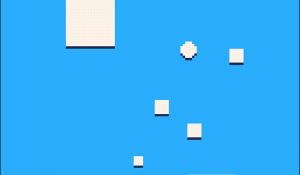
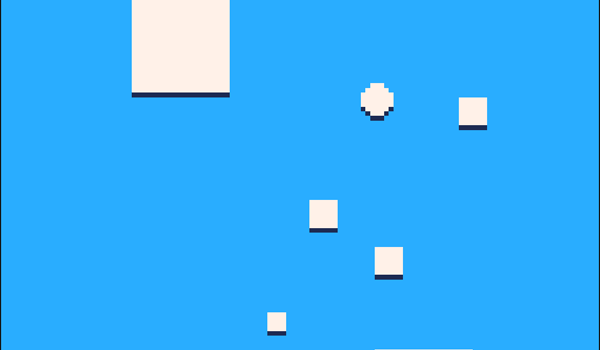
In this reflex-based challenge, players control a small circle moving across a field filled with squares that drift in various directions. The primary goal is to avoid any direct contact with these squares. Each time a square collides with another, it vanishes and adds to the player's score. This creates a dual objective: survive while also manipulating the movement of squares to trigger chain reactions. The game begins at a comfortable speed, allowing newcomers to learn the controls and observe square behavior. Over time, the pace increases, demanding faster reactions and more careful positioning.
Scoring Through Chain Reactions
Rather than simply evading obstacles, the game rewards strategic thinking. Players can guide squares into one another to make them disappear, earning points for each collision. When multiple squares collide in quick succession, chain reactions occur, providing bonus points. This encourages players to herd groups of squares together rather than flee from them. Mastering this technique is key to achieving high scores. The scoring system is straightforward, with no complicated multipliers or power-ups, keeping the focus on player skill and timing.
Difficulty Progression
As time passes, the squares move faster and may become more numerous, increasing the challenge. The game does not introduce new mechanics or obstacles; instead, it relies on the escalating speed to test the player's reflexes and decision-making. This gradual ramp-up ensures that each session feels fresh, as players must continuously adapt to the changing pace. The difficulty curve is smooth, offering a satisfying challenge for both beginners and experienced players. There is no set endpoint, so each round offers a unique experience based on how long the player can survive.
Visual Design and Focus
The visual style is minimal, with a clean background and simple shapes that keep the player's attention on the action. Colors are used sparingly to highlight the circle and squares, reducing visual clutter. This design choice helps players track multiple moving objects without distraction. The interface shows only essential information, such as the current score and time survived. This minimalist approach makes the game suitable for short play sessions, as it loads quickly and requires no lengthy tutorials. The focus remains entirely on the core gameplay loop of navigation and collision avoidance.
Accessibility and Replay Value
The controls are simple, typically requiring only mouse movement or touch input to guide the circle. This makes the game accessible to players of all ages and skill levels. There are no complex menus or settings to adjust, allowing immediate play. The endless nature of the game, combined with the increasing difficulty, provides high replay value. Each attempt offers a chance to improve one's score and reaction time. Players can challenge themselves to beat personal bests or compete with friends informally. The straightforward mechanics ensure that the game remains engaging over multiple sessions.


Player Comments
Sign in to comment
You must be logged in before posting a review or rating.
No account? Create one
No comments yet. Be the first to comment!