Teamwork Puzzle Journey
Reviews
Description
Shared Objectives and Collaborative Play
Teamwork Puzzle Journey places two players in a series of interconnected platform levels where success depends on joint effort. Each stage presents obstacles that require both participants to act in concert. One player might need to hold a switch while the other crosses a gap, or both must time their movements to avoid hazards. The game emphasizes communication and planning, as each person controls a character with distinct abilities. This design ensures that neither player can simply carry the other; progress demands genuine cooperation. The puzzles are structured to encourage discussion and strategy before action, making every level a shared intellectual challenge.
Level Design and Progressive Difficulty
The game features multiple stages that gradually increase in complexity. Early levels introduce basic mechanics like moving blocks and activating simple switches. Later stages combine these elements with timed sequences and environmental puzzles that require precise coordination. The difficulty curve is carefully calibrated to keep both players engaged without becoming frustrating. Each level has a clear objective, such as reaching an exit or collecting a set of items, and provides visual feedback when tasks are completed. This clarity helps players focus on solving the puzzle rather than figuring out what to do next. The variety in level layouts ensures that no two stages feel identical, maintaining interest throughout the experience.
Character Controls and Interaction
Each player uses a separate set of controls to move their character through the environment. Basic actions include walking, jumping, and interacting with objects like levers, crates, or platforms. Some levels introduce items that can be picked up and used, such as keys to unlock doors or tools to bridge gaps. The control scheme is straightforward, allowing players to focus on coordination rather than complex inputs. Both characters have similar movement capabilities, but their roles in solving puzzles often differ based on the situation. For example, one player might need to reach a high ledge while the other provides a boost. This asymmetry in tasks reinforces the need for teamwork.
Visual Style and Family-Friendly Atmosphere
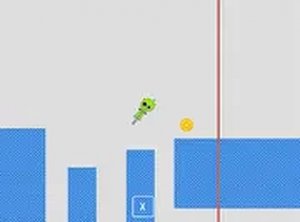
The game adopts a colorful and inviting visual style suitable for all ages. Characters are designed as simple, friendly figures, and the environments feature bright landscapes with clear, readable layouts. There is no graphic violence or disturbing imagery; challenges are presented as playful obstacles rather than threats. The sound design complements the visuals with cheerful music and satisfying audio cues for actions like collecting items or completing a puzzle. This approachable aesthetic makes the game welcoming for children, parents, and casual players alike. The overall tone is positive and encouraging, reinforcing the cooperative spirit at the heart of the experience.
Strategic Use of Power-Ups and Items
Throughout the game, players may encounter power-ups that temporarily enhance their abilities. These can include speed boosts, increased jumping height, or the ability to move heavy objects. Using these enhancements effectively requires timing and coordination between both players. For instance, one player might activate a speed boost to reach a distant switch while the other prepares to cross a bridge. Items like keys or tools must often be carried to specific locations, requiring one player to transport them while the other clears the path. Strategic planning around these resources adds depth to the puzzle-solving, encouraging players to think ahead and adapt their approach as new tools become available.





Player Comments
Sign in to comment
You must be logged in before posting a review or rating.
No account? Create one
No comments yet. Be the first to comment!